
Impact Factors Rise for Chinese "Returning" Journals, but Only Journal of Zhejiang University-SCIENCE B Outperforms Its Peers
China is seeking a stronger voice in academic publishing and has embraced the ambitious slogan "Write papers on the land of the motherland." As part of this effort, several journals that had been published through international academic publishers have returned to domestic publishing platforms in recent years—the so-called "returning" journals. How are these "returning" journals faring? Can domestic publishing platforms serve them well? These questions have drawn considerable attention. The answers bear on whether this ambitious strategy will become a reality.
To this end, the 5GH team used quantitative metrics to assess the performance of the "returning" journals. In the first part, we examined their impact factor performance. Although the impact factor should not be the sole metric for evaluating a journal, it can help us quickly gauge changes in a journal's international influence. We initially selected 11 journals whose "returning" took place in 2022 as candidates. Ultimately, Communications on Pure and Applied Analysis, Journal of Zhejiang University-SCIENCE A, Journal of Zhejiang University-SCIENCE B, and Acta Biochimica et Biophysica Sinica were included in the analysis because they had continuous impact factor records for several years before and after their "returning."

The results show that although all four journals saw their impact factors increase after "returning," their growth was smaller than that of benchmark journals in the same fields.
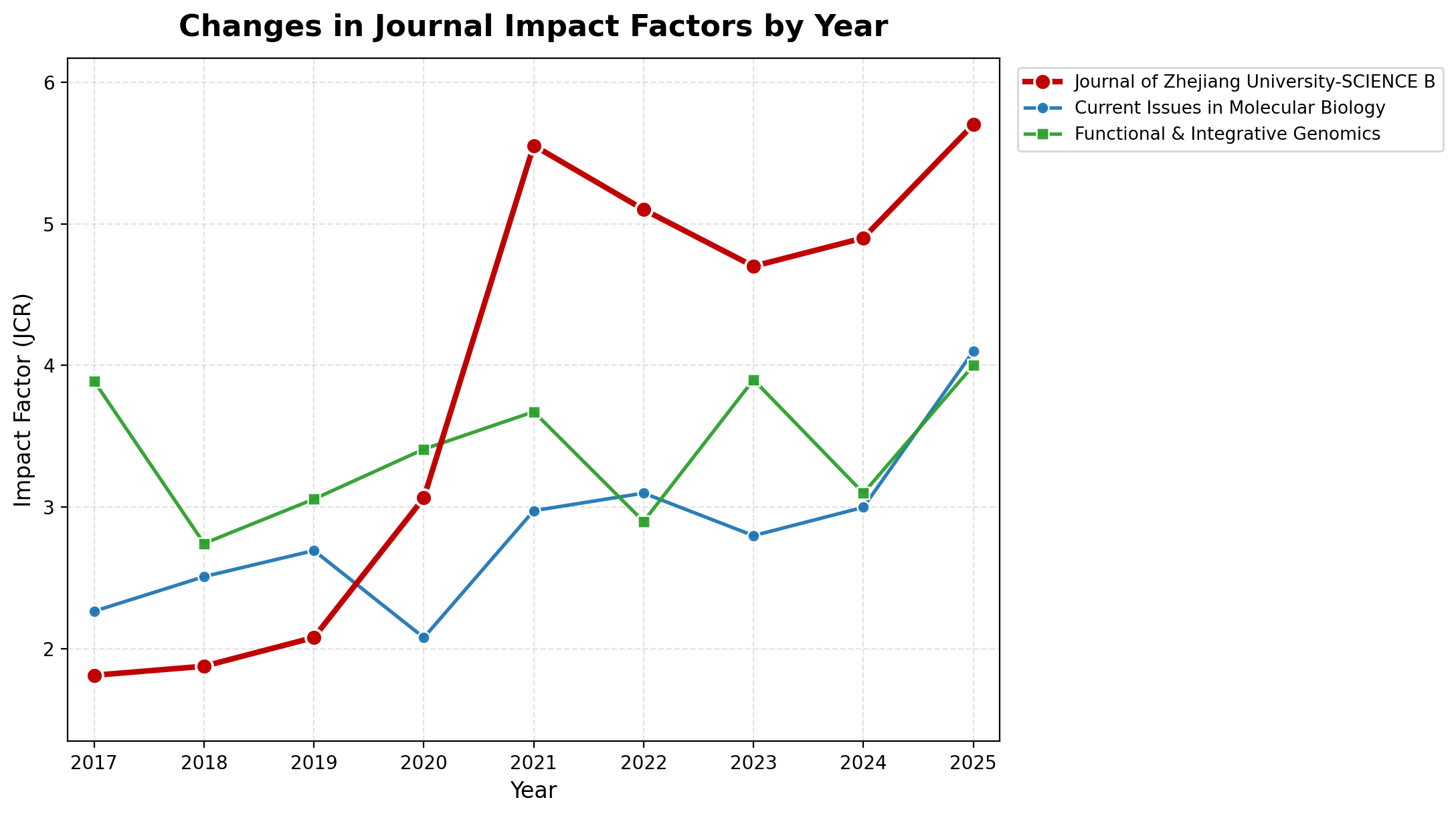
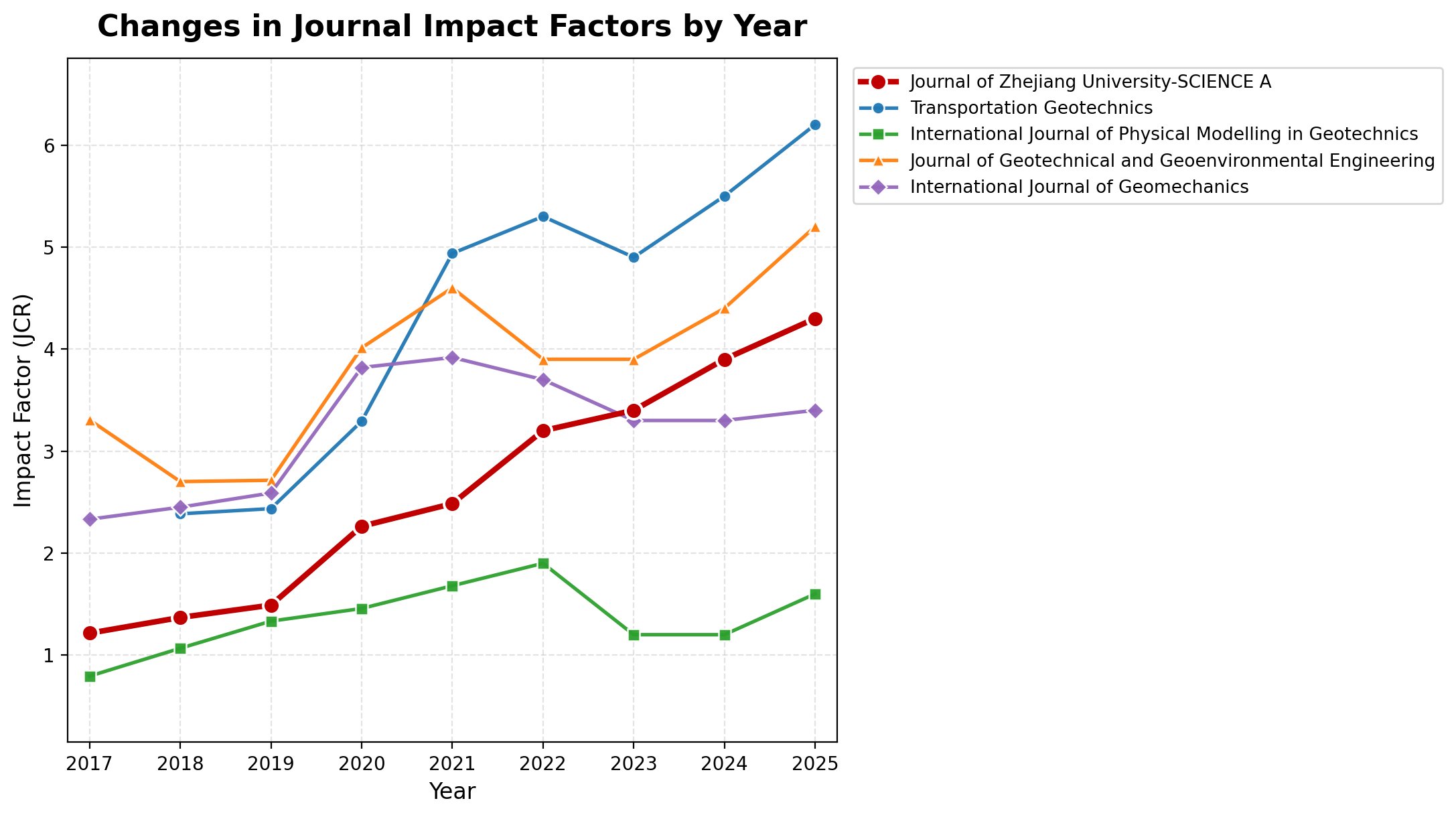
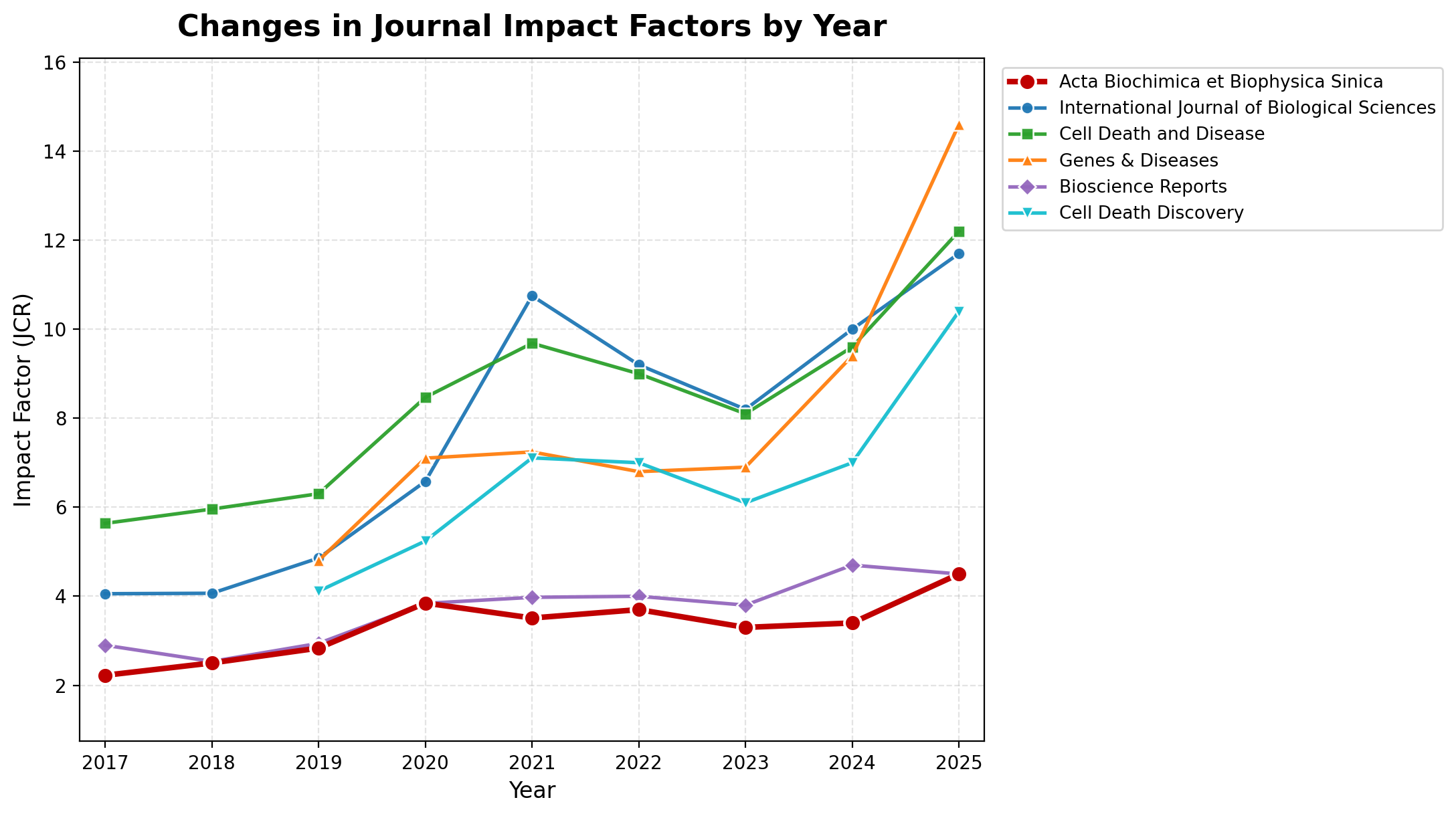
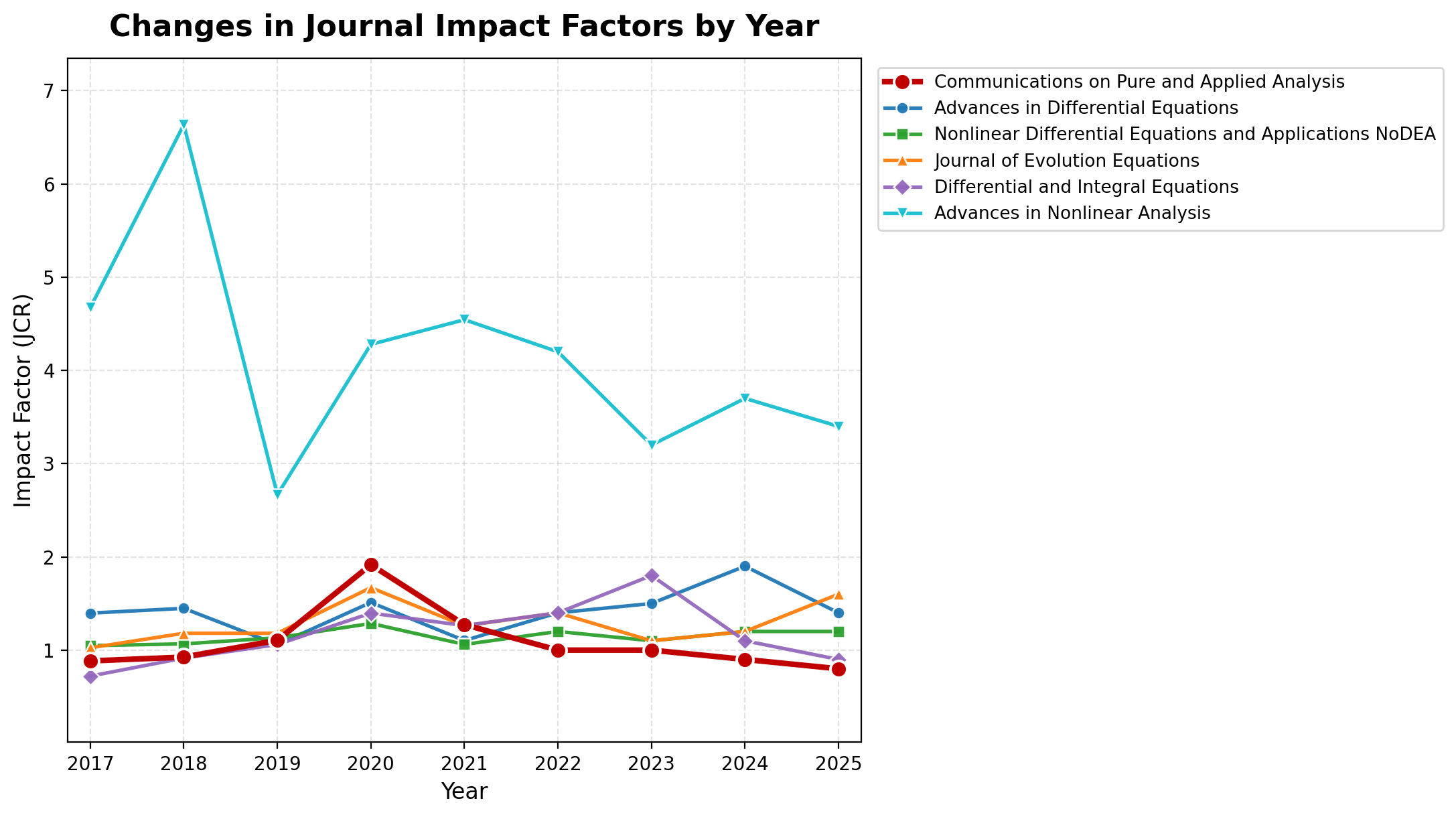
We used "field vectors" to select comparison groups for the "returning" journals. In the OpenAlex database, every paper published in any journal is assigned to a field. There are 26 fields in total. The distribution of a journal's papers across these 26 fields forms its "field vector." The cosine of the angle between two journals' "field vectors" is used to represent their field similarity. This similarity ranges from 0 to 1. The closer it is to 1, the more similar the two journals' field profiles are. We selected the journals whose field profiles were closest to those of the "returning" journals as benchmarks, and arrived at the above conclusion.
It is worth noting that this is only the first step in our assessment of the performance of the "returning" journals. The 5GH team is committed to using quantitative metrics to evaluate the effects of the "returning" strategy. We will release more results in due course.