
Salami Slicing Publication Practices by a Group from Liaoning Normal University
A recent investigation reveals that an author group from Liaoning Normal University with core authors of ZHU Xingchen (朱星辰) exhibits several salami-slicing publication practices.
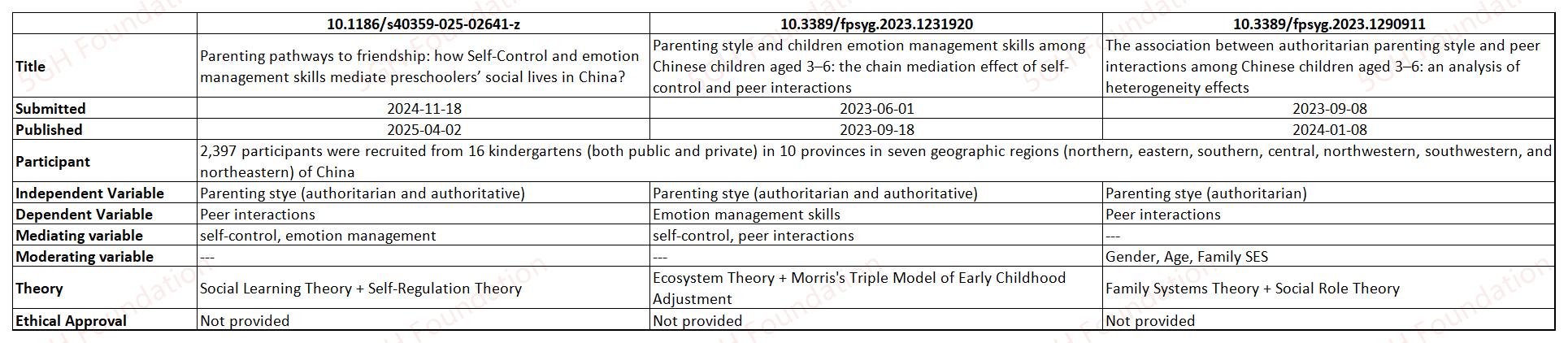
Articles [1]–[3] are such examples. They report findings from the same questionnaire study, involving the same participant group: 2,397 children aged 3–6 years and their parents, recruited from 16 kindergartens across 10 provinces in seven geographic regions of China (northern, eastern, southern, central, northwestern, southwestern, and northeastern). In these articles, authoritarian and/or authoritative parenting styles were used as independent variables, while the dependent variables differed: peer interactions were examined in articles [1] and [3], and emotion management skills in article [2].
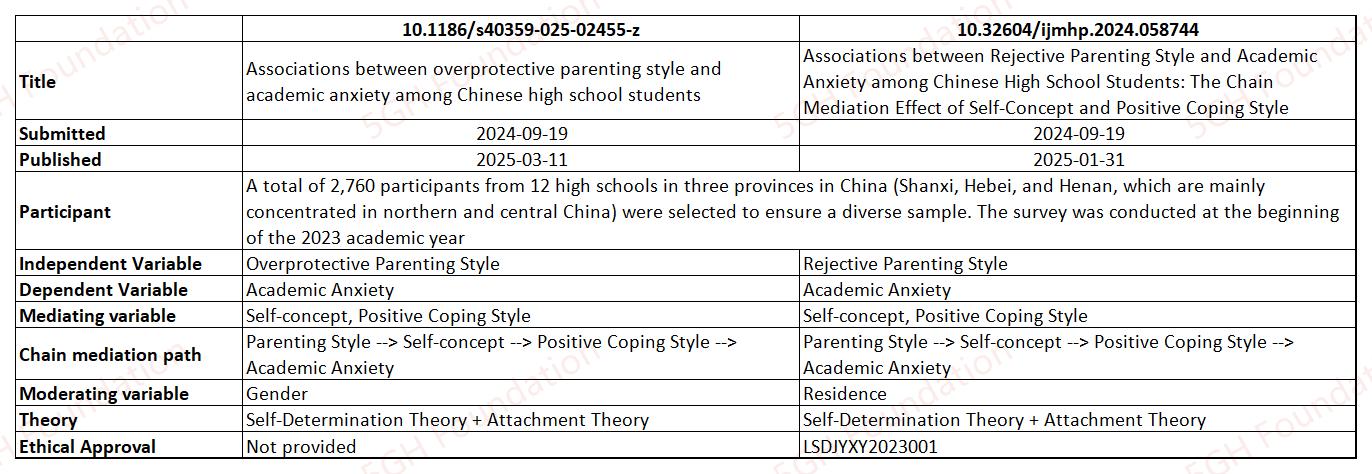
Articles [4] and [5] provide further examples. Both describe results from another questionnaire study conducted during the 2023 academic year, with the same participant pool of 2,760 students from 12 high schools in three provinces (Shanxi, Hebei, and Henan) in China. The independent variables differed between the two articles, overprotective parenting style in article [4] and rejective parenting style in article [5], respectively, whereas the dependent variable (academic anxiety), mediating variables (self-concept and positive coping style), and the chain mediation path (parenting style --> self-concept --> positive coping style --> academic anxiety) were identical in both.
These salami-slicing practices are believed to be intended to boost the authors' publication records, especially those of the core author, ZHU Xingchen. However, they provide limited contributions to the scientific community.
Reference
[1] 10.1186/s40359-025-02641-z
[2] 10.3389/fpsyg.2023.1231920
[3] 10.3389/fpsyg.2023.1290911