
An acquisition-value assessment for Chinese publishers and AI-corpus strategy: a six-dimension scoring model, 25 ranked targets, a discipline-gap map and a staged deal path.
One of Europe's largest journal systems, built to satisfy a domestic list rather than a global readership. Ukraine publishes more titles per researcher than almost any of its neighbours, gives them away under the most open licences in the world, and still cannot make most of them visible. This profile maps who owns, funds, registers and reads Ukrainian scholarship, and what the 2026 reforms are trying to change.
An acquisition-value assessment for Chinese publishers and AI-corpus strategy: a six-dimension scoring model, 18 ranked publisher targets, a four-tier classification of 1,840 journals, a discipline-gap map, a corpus funnel and a staged deal path.
A data-driven portrait of who publishes Russia's research, how the system is structured, how it is funded, and how it changed after 2022 — built from 3,293 library records, 1,735 publisher registrations and 653 open-access journals.
An acquisition-value assessment for Chinese publishers and AI-corpus strategy: a seven-dimension scoring model, 30 ranked targets, a discipline-gap map, a sanctions-compliance path and a staged deal structure.

China is seeking a stronger voice in academic publishing and has embraced the ambitious slogan "Write papers on the land of the motherland." As part of this effort, several journals that had been published through international academic publishers have returned to domestic publishing platforms in recent years—the so-called "returning" journals. How are these "returning" journals faring? Can domestic publishing platforms serve them well? These questions have drawn considerable attention. The answers bear on whether this ambitious strategy will become a reality.
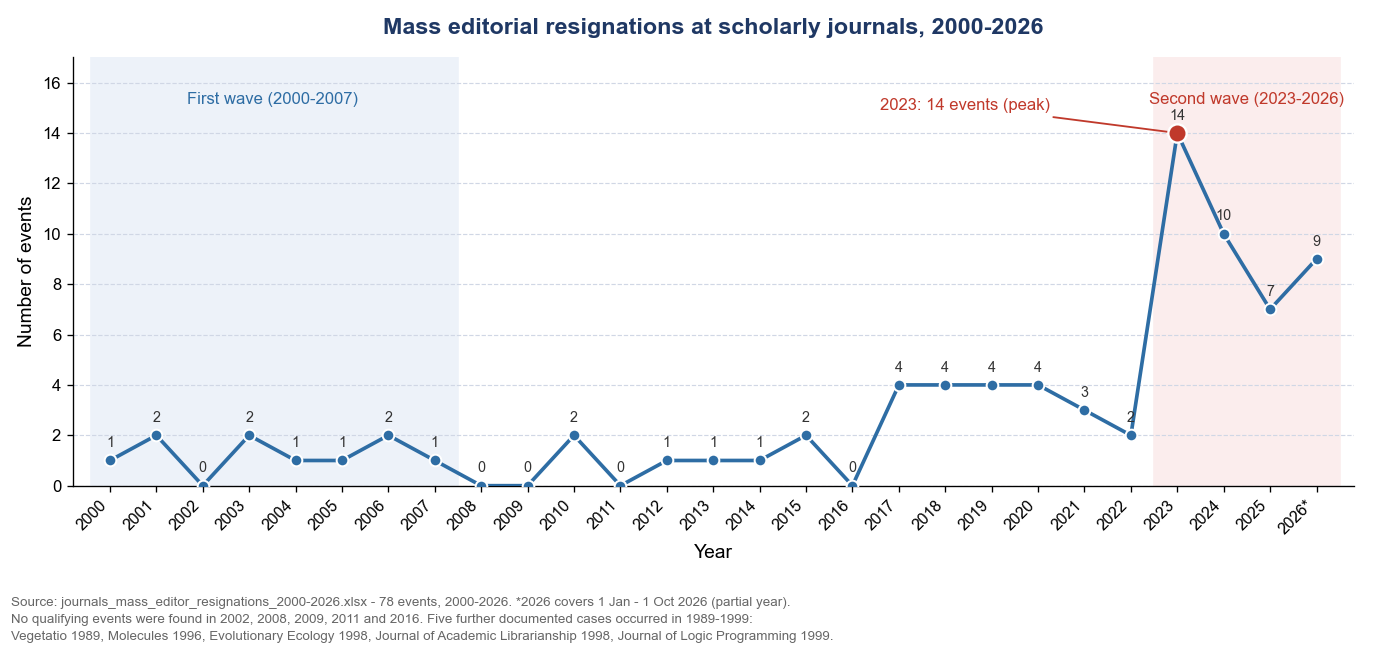
Mass editor resignations at academic journals have risen in recent years. Since 2000, there have been 78 such events, peaking at 14 in 2023.
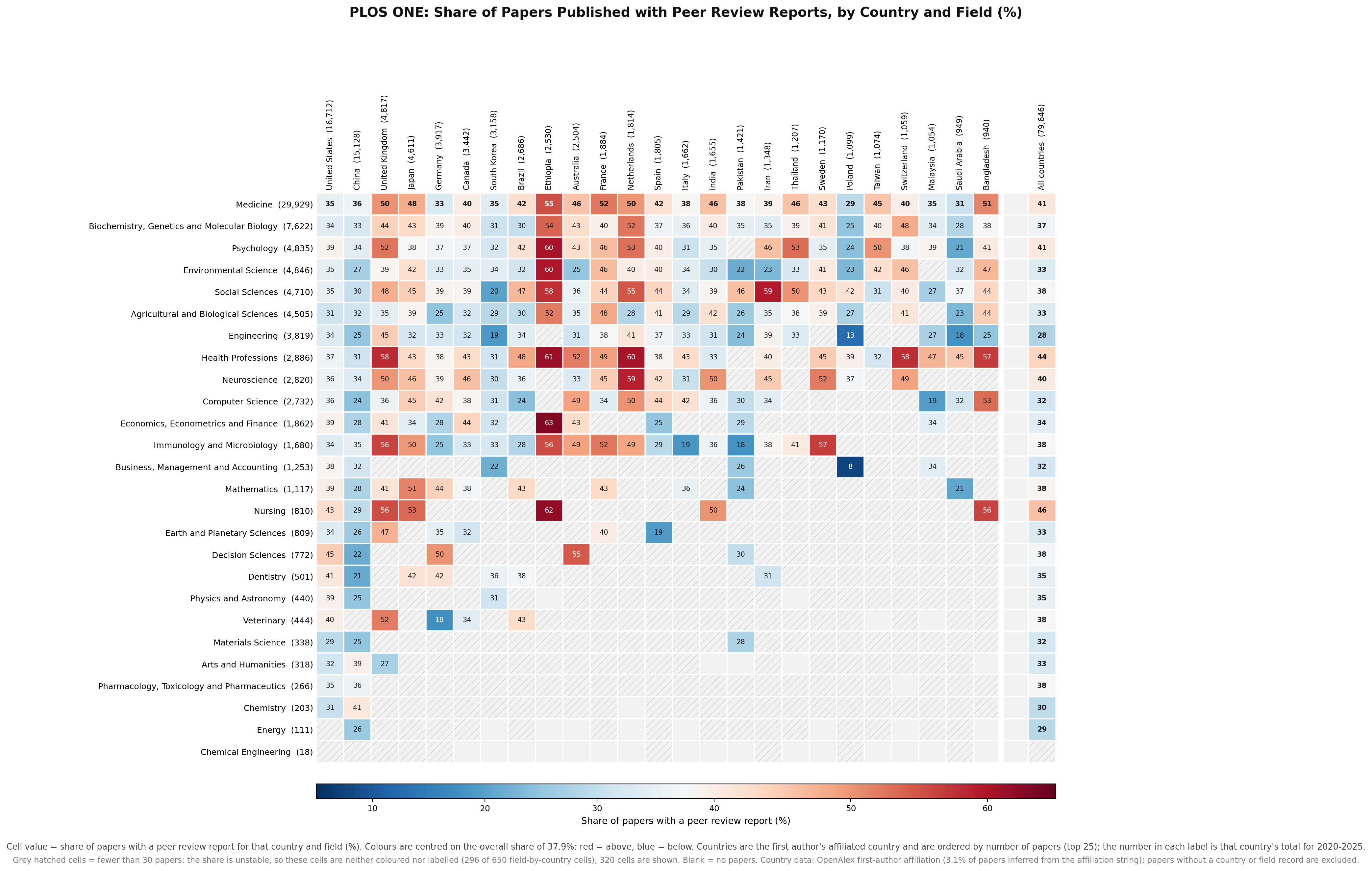
Since 2019, the academic publisher PLOS has allowed authors to choose whether to publish peer review reports alongside their manuscripts. Between 35% and 40% of authors have opted to do so in recent years, although the share has declined slightly from its 2023 peak of 38.8%. However, this share varies across authors working in different fields and from different countries.
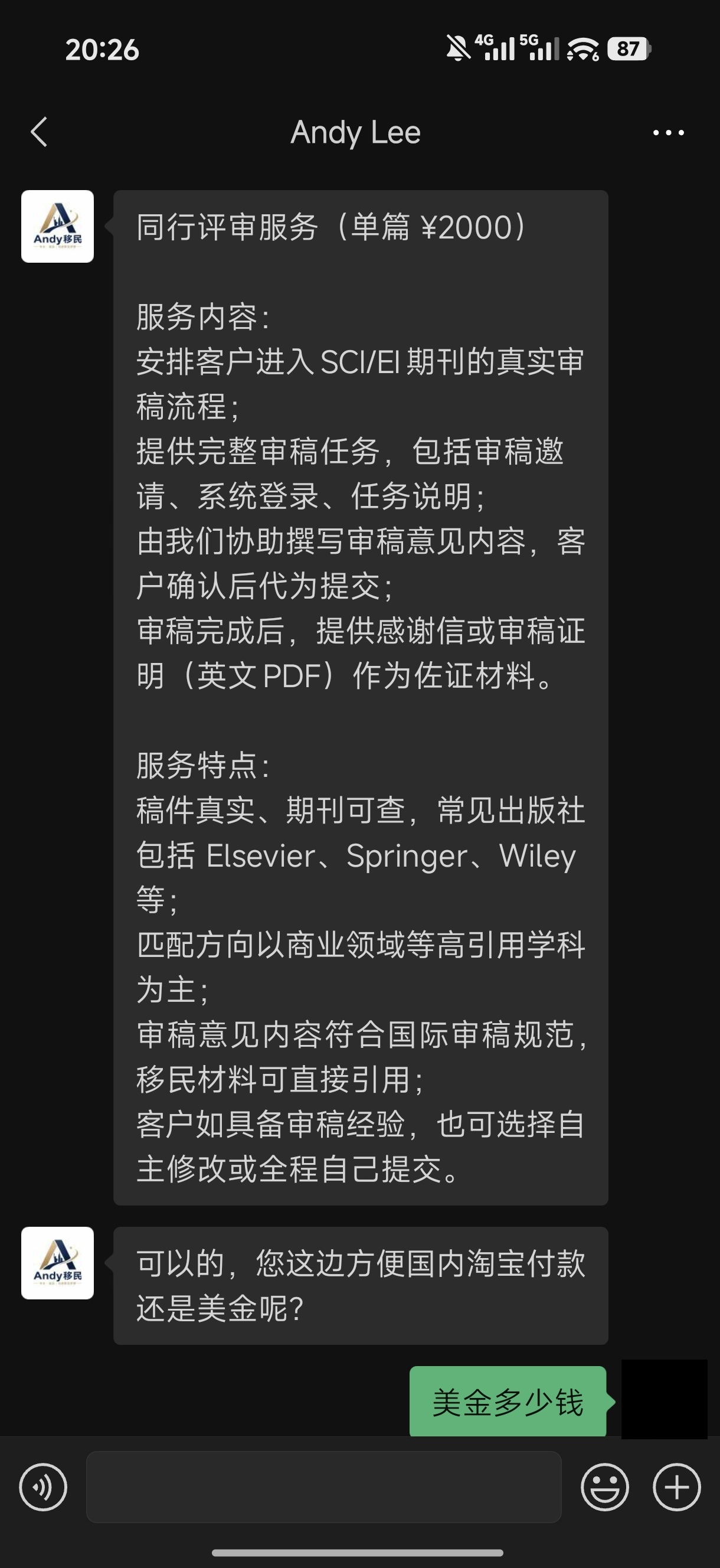
Recently, the 5GH Team noticed an advertisement on RedNote (a.k.a. Xiaohongshu, a Chinese social media) that an immigration services company claimed it could secure peer-review experience for clients.